
"The Festival of Democracy"
India goes to the polls

Elections are under way in India.
An estimated 70% of 960 million Indians eligible will cast their votes in this year’s election, amounting to nearly 700 million votes that will be counted by June 4, when results will be announced. As a point of reference, 158 million Americans, about 63% of eligible voters, voted in the Presidential elections in 2020, which makes the Indian elections nearly five times larger in scale.
Elections in India have historically been laborious affairs, stretching over weeks and conducted in phases. This time, they will be even longer by two weeks, leading some to question the wisdom of prolonging an already arduous task during the sizzling hot summer months.
Indeed, temperatures have soared in April and turnout in the first and second phases appears to be weaker than expected, just over the 60% mark, and trending well below normal. Although noisy and boisterous, Indian elections in recent decades have been predictably sedate. Narendra Modi, the right wing Hindu nationalist and his party (BJP) won comfortably in 2014 and 2019, both results expected. Similarly, when Congress and its allies won in 2009, few eyebrows were raised.
In contrast, India’s 2024 elections got off to a controversial start even before polling began. Modi and his protege, Amit Shah, first appointed themselves to the selection committee, which appoints the commissioners to the Election Commission of India. This was immediately met with howls of protest since ECI is responsible for the fair conduct and integrity of the elections. Modi has since used his new authority to appoint new commissioners for the 2024 elections. It is worth noting that the ECI, once vaunted to be a pillar of integrity in the electoral process, has seen its credibility wane in the last several years, and has been the subject of public criticism and even the ire of the judiciary.
Even as the public digested the news about the ECI, fresh controversy broke as details came to light that the ruling party, BJP, has been the beneficiary of over Rs. 8,000 crores in “Electoral Bonds.” This happened only after the Supreme Court ordered that they be revealed to the public and the government vigorously resisted and then gave in. The simplest way of describing the electoral bonds is that they are a legal means for private sector corporations to donate to political parties. It is worth noting that all parties, not just the BJP, are eligible to receive such donations, which can be effectively described as legal bribes.
Corruption has been a long standing issue in Indian politics. Every few years, a new scandal comes to light. The Congress government was voted out in 2014 due to mounting frustration over numerous scandals that plagued its term. Modi’s government has been largely free of such taint since it began, although corruption continues to remain under the surface at the ground level. There were some murmurs over a defense deal sometime back but the BJP was able to quash them. In fact, Modi promised that he would repatriate “black money,” a term used to describe money that goes unaccounted to avoid paying taxes, from Swiss accounts and distribute 150,000 rupees each to every Indian citizen. While the promise is now long forgotten, Modi managed to maintain a relatively clean image on corruption until the Electoral Bonds scandal broke. “Where is the scam when we have taken the money legally?” retorted Modi and his party in response to the breaking news.
Perhaps, as a measure to deflect attention away from the growing angst over the electoral bonds scandal, Modi ordered the arrest of Arvind Kejriwal, the Chief Minister of Delhi, on charges related to yet another scandal related to the rights of distribution of liquor in Delhi. Whatever the merits of the case against Kejriwal may be, the optics of arresting a prominent political rival weeks before the start of the elections, has cast an even longer and darker shadow over the elections. Wait, there is more. The Indian National Congress, BJP’s main rival, found that its bank accounts had been frozen over non-payment of tax arrears from nearly twenty years ago. Needless to say, all of this has set the cat among pigeons and has led to furious speculation on why Modi has felt compelled to resort to spiteful, even draconian tactics.
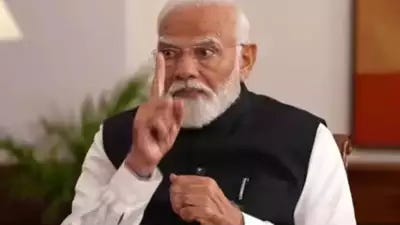
It is entirely conceivable that Modi and Shah are worried. They are fighting for not just a mere win, but for survival. There are a number of reasons why this could be true. The most plausible one is that Modi cannot afford to be out of power in his lifetime. He is 73 years old now, and I’m sure we all wish him a long and happy life and he has many years left in his life. He has been continuously in power since 2002, whether as Chief or Prime Minister, and has made many enemies with his polarizing approach. I wouldn’t be surprised if he fears retribution if and once out of office.
Even if he wins this time, his party prohibits him from seeking power in 2029, by disallowing candidates over the age of 75. He needs to find a path. This could explain his almost frenzied call to voters to give him 400 seats in the Parliament. With an absolute majority, he gives himself enormous flexibility and options. He could, for instance, redefine the role of President of India, which is largely ceremonial now, to be more influential in the future and appoint himself President, presumably for life.
Modi’s worst case is that the BJP fails to secure even a simple majority. I wouldn’t blame him for being paranoid about this possibility. While the last decade have been one of some accomplishment, there have been big misses too. His demonetization attempt ended in a fiasco. There is growing resentment against the government favors to the billionaire class. Modi’s handling of Covid was a mixed bag, showing sheer incompetence at first, followed by a hasty but well executed vaccine campaign. Nearly a third of new college graduates today are estimated to be unemployed. Inflation still runs rampant. Indian elections are notorious for their surprises. I had just moved to Bangalore when the 2004 elections happened and the rug got pulled under the BJP’s feet then. At that time, I had honestly thought they were a shoo in. Their now infamous “India Shining” slogan is cited as an example of tone deafness. Modi perhaps fears a similar fate as Vajpayee, another BJP prime minister who was well liked but cast aside.
When you consider this context, it is not surprising that Modi has upped the ante through borderline authoritarianism and fiery rhetoric. In a speech in Rajasthan last week, he described the 200 million citizens of India as “infiltrators,” (the Hindi word for it is far more pejorative), and accused the Congress of having nefarious designs to take away the mangalsutra-s (necklaces worn by married Hindu women) and give it to Muslims. Modi’s speech hit a new low in Indian politics. For the first time, an Indian prime minister had resorted to name calling a minority group of citizens, reminiscent of Donald Trump’s tactics in 2016 then in 2020, and even now.
While it is not surprising to see Modi to sink to a personal low, considering what is at stake for him, it must be disappointing to some of his legions. So far, Modi had always steered clear of religious diatribes, at least in public, leaving it to minions in his party to do the dirty work. The carefully worn mask had, importantly, provided air cover and respectability over the years to his supporters, many of whom are prominent businessmen and honorable members of their communities. I wonder what effect his coming out with an unapologetic religious polemic will have on his fans? Will they reconsider their support? Or, perhaps, this, Modi figured, is exactly what they were waiting to hear?
We will find out on June 4.
When the Election Commission announced the election dates, Modi exulted and described the Indian elections as “a festival of democracy.” In India, we celebrate festivals with hope, prayer and good will. They are colorful and joyous occasions. The elections in India this year can be described as anything but a festival. We can only pray they don’t end up as a funeral for democracy.
Next issue: My views on Hindutva, the form of Hindu nationalism espoused by Modi and BJP.
Have a great week ahead. May the Force be with us.
A very well written article, though, I have my own mental reservations, regarding some of the issues involved. Let us await the FINAL VERDICT on 4th June, which will reflect the GENERAL OPINION ANS ASPIRATIONS OF THE GENERAL PUBLIC. A victory in elections, does not invalidate any just criticism, nor a defeat, the REAL ISSUES FACED BY THE NATION.